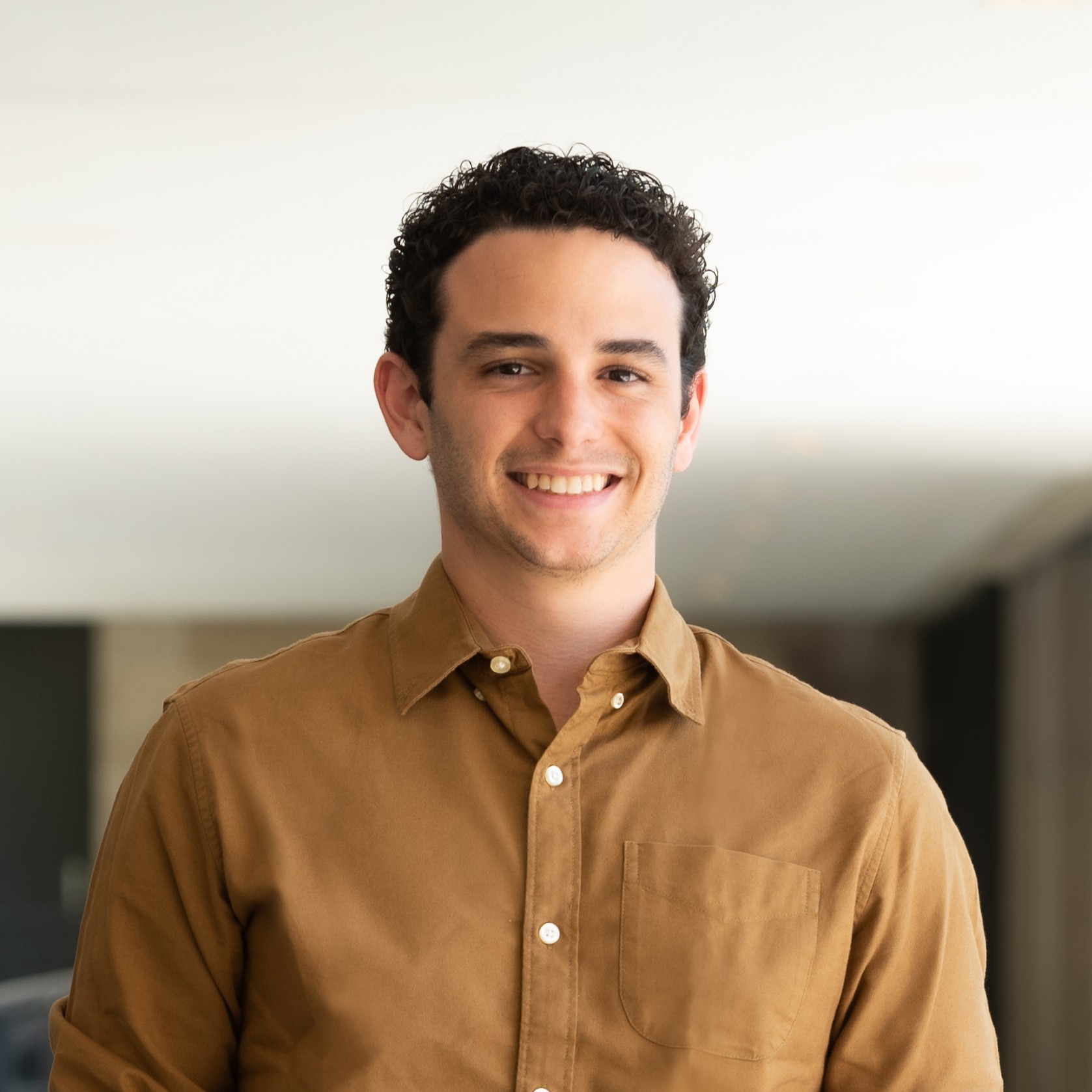
Thomas A. Berrueta
Incoming Assistant Professor of Mechanical Engineering at Stanford University (Starting November 1, 2026)
Director of the Physical Active Learning Laboratory
My research develops the foundations of robotic self-sufficiency — enabling agents to safely learn, rapidly adapt, and actively exploit their physical embodiment in real time. Always pushing to run our algorithms on complex, agile, high-performance hardware, from autonomous racecars on the track to robots out in the wild.
The PAL Lab tackles real-time robot learning for safety-critical systems. We study settings in which robots have to keep learning continually, making decisions on-the-fly, even when mistakes can be costly. We draw on reinforcement learning, optimal control, information theory, and physics to make that possible, with the goal of enriching how robots interact with and adapt to the physical world.
Join us: The PAL Lab opens in November 2026, and I’ll be recruiting passionate PhD students, postdocs, and researchers. If this sounds like you, please see our lab website!
Latest
-
2026
NEWI’ll be joining Stanford University as an Assistant Professor of Mechanical Engineering on November 1, 2026, where I’ll launch the Physical Active Learning (PAL) Lab. More on open PhD and postdoc positions soon.
-
2026
Our paper on environment-aware GNSS covariance learning for autonomous racing was accepted to ICRA 2026, and our workshop paper on online continual learning for robust LiDAR perception at racing speeds was named a Best Paper Finalist.
-
2025
Named Associate Editor of IEEE Robotics and Automation Letters (RA-L), handling Aerial & Field Robotics and Theoretical Foundations.
-
2025
As technical lead of Caltech Racer, our autonomous IndyCar program made its debut at its first U.S. road-course challenge — featured by Caltech Magazine. Read more
-
2025
Invited talks: “Robot learning on the edge” at the ELLIIT Robot Learning Symposium (Lund University, Sweden), and a robotics panel at a16z Tech Week (Los Angeles).
-
2024
Maximum Diffusion Reinforcement Learning published in Nature Machine Intelligence, and named a Microsoft Future Leader in Robotics and AI. Article
Research
Safely learn
High-performance robotic systems, like autonomous racecars, can be unforgiving. I design robot learning algorithms to work at runtime for these kinds of platforms, fusing the predictive power of learned models with guarantees that actually hold on hardware.
Rapidly adapt
Robots that learn in simulation often stumble in the real world. I build sample-efficient algorithms that let robots learn new skills directly on hardware. I leverage techniques from model-based reinforcement learning and active learning to make this possible.
Actively exploit
A robot's body, its sensors, materials, and dynamics, are a resource, not just a constraint. I build agents that actively probe and exploit their own embodiment, leveraging the physics of a system and their environments towards robot learning and control.